Immigration has traditionally been a wedge issue in American politics that influences campaign messaging. Most recently, immigration as a political topic has been highlighted by the increased enforcement of federalpolicies. In July 2025, a comprehensive bill was introduced that included a pathway toward permanent lawful residency for Dreamers. The latest action on H.R. 4393 – DIGNIDAD (Dignity) Act of 2025 was taken on July 16th, 2025, when it was referred to the Subcommittee on Border Security and Enforcement. The public has been promised comprehensive immigration reform with a pathway towards citizenship for DREAMers for over two decades, and a new Gallup Poll shows what the public would like to see when the promise is fulfilled.
The Gallup survey suggests the American public may be further ahead than our political system.
One finding stood out immediately. Nearly two-thirds of Americans (64%) believe legal immigration helps fill workforce gaps created by our growing retired population.
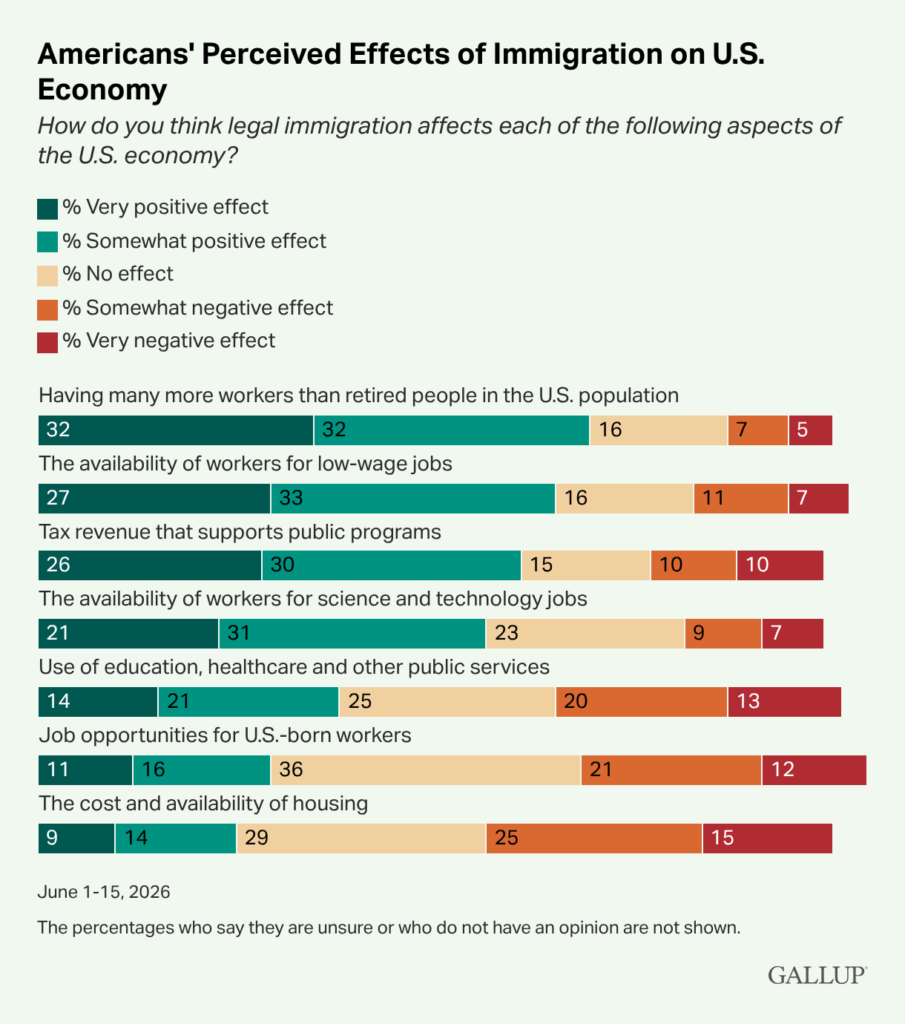
The United States is facing a demographic reality that is difficult to ignore. Millions of Baby Boomers are retiring, birth rates remain below replacement levels, and the labor force is growing more slowly than it has in previous generations. While investing in education, workforce development, and higher labor force participation remains essential, immigration is also an important part of maintaining a strong workforce and supporting long-term economic growth. Immigration is not the only answer, but it is an essential part of the solution.
The conversation should no longer be whether immigration plays an important role in our economy. The question is how we design an immigration system that is orderly, secure, fair, and capable of meeting the nation’s workforce needs.
The survey also found remarkably broad support for pathways to citizenship.
Gallup reports that 81% of Americans support allowing immigrants who were brought to the United States without the proper governmental authorization as children to become citizens if they meet certain requirements. Even more notable, 75% support a pathway to citizenship for immigrants currently living in the country undocumented, provided they also meet established requirements. In both cases, more respondents “strongly favor” these proposals than simply “favor” them.
At the same time, Americans appear less supportive of the most aggressive enforcement proposals. Majorities oppose mass deporting and oppose requiring local governments to eliminate sanctuary policies. According to Gallup, more respondents strongly oppose these proposals than simply oppose them.
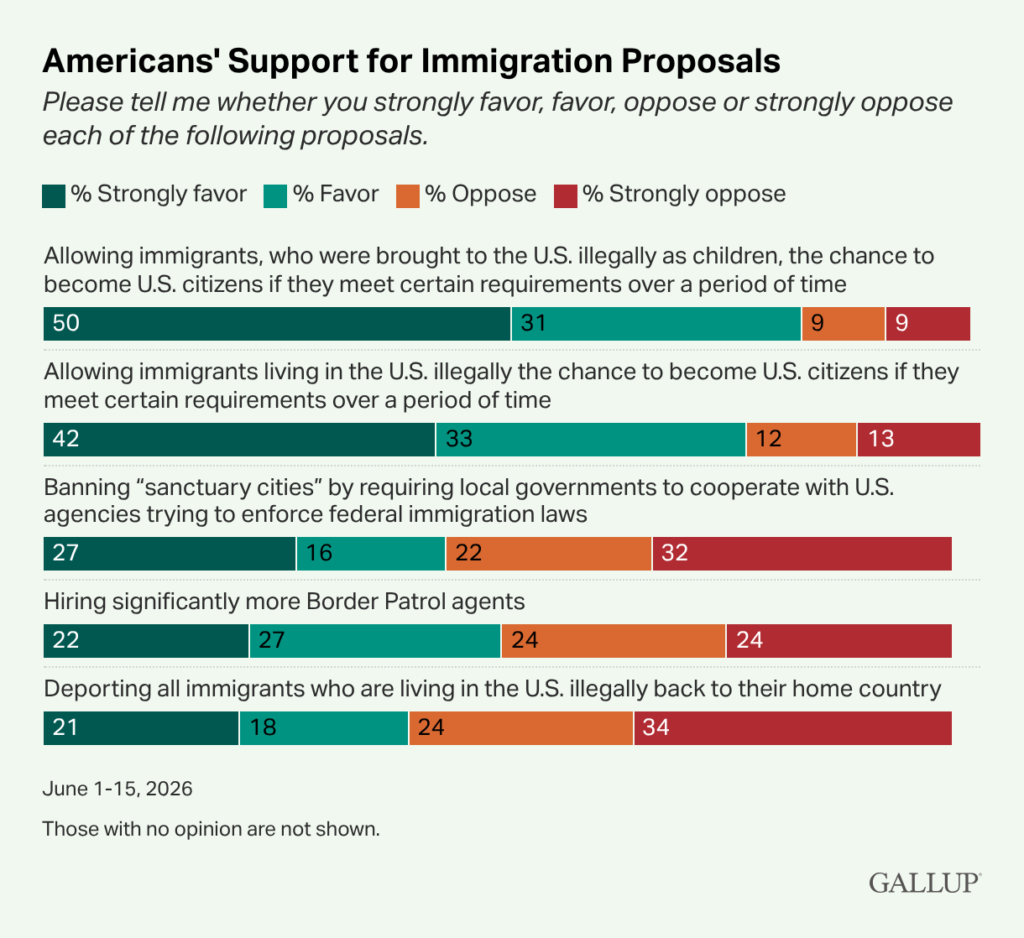
Taken together, these findings paint a more nuanced picture than political rhetoric often suggests. Americans appear to support secure borders and an orderly immigration system, while also supporting opportunities for people who have built lives here to earn legal status under clear requirements.
As someone whose family immigrated to this country when I was five years old, I know immigration is more than a political issue. It is about people, opportunity, work, and the future of our communities.
With the midterm elections approaching, immigration will almost certainly become a central campaign issue once again. Voters should expect more than slogans. They should ask candidates what specific reforms they support, how those reforms would strengthen our workforce, improve border safety, modernize the immigration system, and provide lasting certainty instead of another decade of political stalemate.
If public opinion is moving toward practical solutions, perhaps it’s time our politics catch up.
One question continues to stay with me:
If large majorities of Americans support a pathway to citizenship, and similar levels of support have existed for years, why has Congress still been unable to pass comprehensive immigration reform?