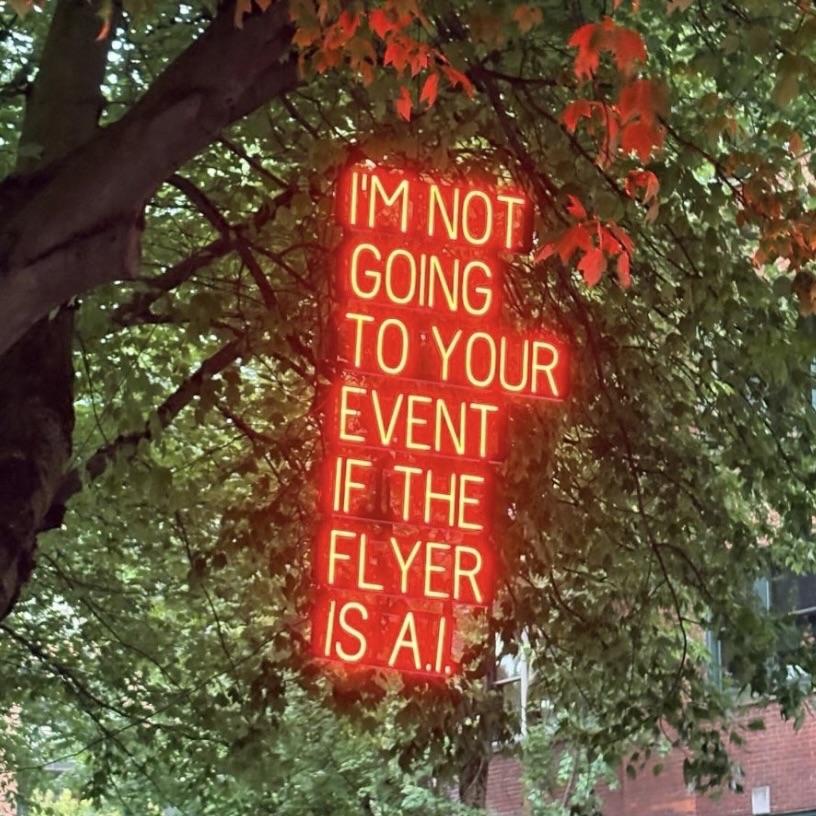
A recent LinkedIn post sparked a conversation about AI-generated flyers and whether people should avoid events that use them. We are in a moment where artificial intelligence is moving quickly, and people are still trying to understand what it means for their lives, jobs, creativity, and livelihoods. There are real concerns and important questions about the negative impacts of AI.
An AI-generated flyer is not enough for me to dismiss a community event. I care more about the purpose, the people, and whether the gathering serves a real need.
If the event matters, I am going. I have attended events promoted with no flyers, handmade flyers, and digital flyers because I cared about the purpose.
That does not mean quality and clear communication are irrelevant. Beautiful, unique designs from local artists, designers, and creative professionals are important to our lives. When organizations have the resources to invest in that expertise, they should. But I do not think we should automatically assume that using AI means someone is careless, inauthentic, or trying to do the least. Sometimes it means they are under-resourced.
That is where I think this conversation gets more complicated.
For a small nonprofit, neighborhood group, student organization, or community volunteer, creating a flyer is not always a simple task. There are multiple tasks, skills, and software needed, and most likely other people that need to be looped into the process. For organizations operating on what I call dental-floss budgets, time and capacity are real barriers.
In that context, AI can be a useful tool. Not a replacement for judgment, creativity, or community knowledge, but a tool that helps people move faster, communicate more clearly, and focus more of their limited time on serving their mission.
I have seen this firsthand. A small organization that already knows its community, understands its message, and cares deeply about the people it serves can use AI to draft a flyer, clean up online content, improve accessibility, and move from idea to outreach in hours instead of weeks. After more than 10 years working in nonprofits, I can honestly say that kind of support can move the mission forward in ways I would not have imagined.
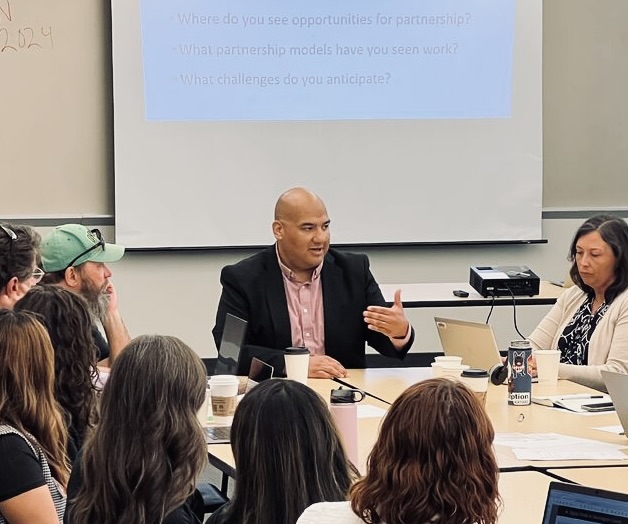
I also see this personally in my own public service work.
Serving on City Council is meaningful work, and it requires significant preparation. Councilors are asked to review complex materials, understand policy trade-offs, listen to community perspectives, and make decisions that affect residents, businesses, and the future of the city. To be fully present for the community, it also helps to understand local, national, and global trends that may influence the issues in front of us. That requires real time and research.
The role is part-time, but the responsibility is much larger. For someone working, raising a family, and trying to stay deeply informed, time becomes one of the biggest barriers to effective service. I often find myself doing Council-related preparation after my son is asleep, choosing between rest and being as prepared as I believe the role deserves is a choice I often make.
This is one of the reasons I have spent time building an AI-assisted workflow to support research, organization, and preparation. I still read the material, fact-check, and use my own judgement. I do not use AI to make decisions for me, process confidential or non-public information. Used carefully, it helps me move through information more efficiently.
To me, that is part of AI’s potential as an equalizer.
When used responsibly, AI can help close some gaps created by unequal access to time, money, and professional networks. For a cash-strapped local contractor, AI can make automation and marketing tools more accessible. For an English Language Learner, it can serve as a personalized study tool. For a busy working-class resident, it can make local government information easier to understand and respond to. For a small nonprofit, it can expand communication capacity without eating up important budget space. For a student or community leader, it can help stretch limited time without lowering the quality of their work.
From my perspective as one City Councilor, our city must remain a place of opportunity amid rapid technological change. Here in the Silicon Forest, we are surrounded by innovation that is shaping the world. But without intentional action, artificial intelligence could widen existing digital divides and deepen economic, educational, and social inequities.
AI will not automatically create equity. But if we are intentional, it can become a tool that helps more people access opportunity, build capacity, and participate in the systems shaping our future.
I am not saying we should adopt AI blindly. There are real reasons to be cautious. AI can produce inaccurate information, reinforce bias, and mislead people. It raises questions about data privacy, intellectual property, labor, transparency, and public trust. These concerns are exactly why responsible adoption matters.
Avoiding the technology entirely will not make those risks disappear. Learning how to use it well, setting clear expectations, and developing holistic policy are all part of the work ahead.
I did not expect to become someone publicly advocating for AI adoption. But I also cannot ignore what I am seeing. For many people, AI is becoming as important to learn as Microsoft Word, Outlook, internet search, or spreadsheets were in earlier moments of technological change.
That is why I believe we should support responsible AI adoption. Not adoption that lowers standards, ignores risks, or causes economic harm to working people. The AI adoption I am advocating for is safe, transparent, practical, and focused on expanding opportunity instead of deepening existing inequities.
That is the conversation I am interested in having.
I want to hear from people who are using AI in practical ways that bring real value to their daily lives. I also want to hear from people who are cautious, skeptical, or concerned, because those perspectives are necessary too.
I may still judge a flyer for being unclear or poorly designed. But I am not going to let a bad flyer keep me from a meaningful conversation. Responsible AI adoption is one of those conversations worth showing up for.